
Rugged Tablets for Warehouses: What Actually Holds Up
- Yuneva Stock Count
- 6 hours ago
- 2 min read
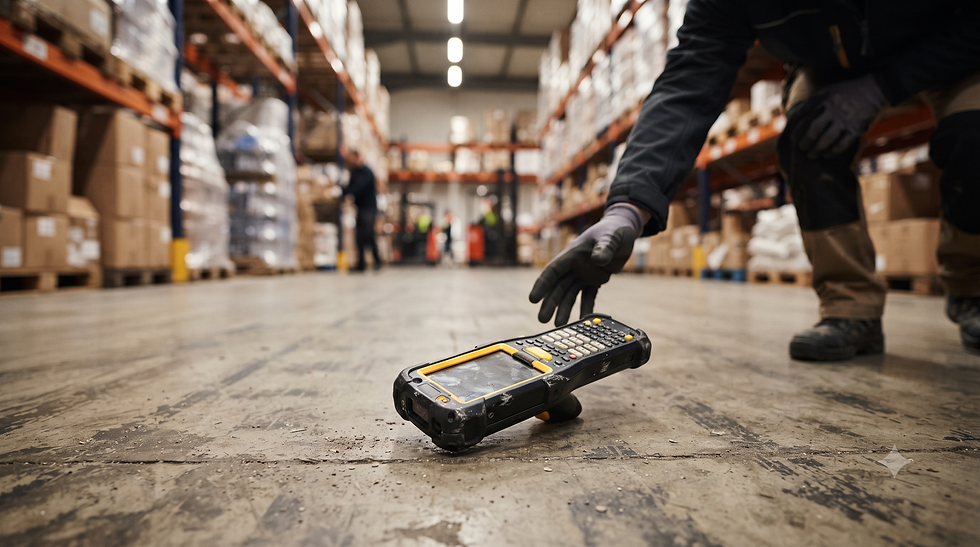
A picker on the night shift drops a tablet from chest height onto a concrete floor. Happens once a week, minimum, in any high-volume operation. The question isn't whether it'll happen — it's whether the device survives it or you're pulling someone off the count to fill out a damage report and hunt for a loaner.
Consumer tablets are not warehouse hardware. I know they're cheaper upfront and everyone's nephew can set one up in twenty minutes. But a Samsung Galaxy Tab that lives in someone's kitchen is not built for a DC running 90°F in summer, forklift exhaust, and the kind of vibration you get when a reach truck rolls past your racking. The IP rating on the box means something only if the seals hold after six months of actual use.
The devices worth trusting in this environment tend to share a few characteristics. Rubberized corner bumpers, not just a slim case snapped over a consumer shell. Gorilla Glass or better on the screen. A rated drop height of at least 1.5 meters to concrete — and that rating from the manufacturer, not the reseller. Scan engines built into the body, not a sled attachment that wobbles loose over time. Battery that a warehouse worker can swap without a screwdriver.
The real cost of cheap hardware isn't the replacement unit. It's the count that stopped mid-aisle, the discrepancy you don't catch until the auditor does, and the associate who's been nursing a cracked screen for three weeks because nobody approved the PO yet. That's where the math starts hurting.
We think about this a lot at Yuneva, because CountIt runs on whatever devices your team already has — but we also know that "whatever you already have" sometimes means a drawer full of cracked screens. More at www.yuneva.com and www.count-inventory.com if you want to talk hardware pairing alongside the software side.


Comments